So I arrived at this. The concept of an old wild west style standoff was one that always excited me as a kid but also confused me.
The whole point is that someone will eventually shoot, and if the other person shoots first it's very unlikely that your reactions will be quick enough to return fire.
So to combat this as almost a failsafe, this mechanism can detect when the other person fires and return fire for you so you can take the other person down with you... hence every standoff will be a draw, everyone wins!
The Video
Hardware
The BB gun I have owned since I was a lot younger - a few days playing with it with friends then it was forgotten about for years. Finally, a productive(?) use for it.
The other components used:
§ 1 x Elegoo Uno R3 (I purchased this starter kit but you can buy just the uno separately.)
§ 1 x Microphone Amplifier
§ 1 x Servo Motor
§ 1 x 9V battery
§ Some string to pull the trigger and Duct tape to hold it all together
Not much to say here about the assembly process, it was pretty much a bodge job. The mic & Uno were hanging off the front and motor & battery were duct-taped to the side.
If I had access to a 3D printer or maybe some more tools I could've made a proper housing for the components to make it look prettier, but there's something about how bad it looks that makes it more funny, I think.
When I return to University in September I will have access to more equipment and so hopefully on future projects, the finished product will look better.
Firmware
The following code was written in the Arduino IDE:
int threshold;
#include <Servo.h>
Servo myservo;

void setup() {
  Serial.begin(9600);
  pinMode(A0, INPUT); //mic connected to A0 pin
  myservo.attach(9); //servo connected to pin 9
  myservo.write(30); //moves servo to start position
  FindThreshold(); // Calculates threshold based on ambient sound level
}

//_______________________________________________________

void loop() {

  if(analogRead(A0) > threshold) {
    myservo.write(0);
    delay(500);
    myservo.write(30);
  }

Serial.println(analogRead(A0));
delay(10); // Avoids double sampling the same noise

}

//_______________________________________________________

void FindThreshold() {
  int i;
  unsigned long sum = 0;

  Serial.print("...calculating background sound level...");
  digitalWrite(LED_BUILTIN, HIGH);

  for (i = 0; i < 10000; i++) {
    sum += analogRead(A0);
    delay(1);
  }

  digitalWrite(LED_BUILTIN, LOW);
  threshold = int((sum/10000) * 1.5);

  Serial.print("\nAverage Background sound level: ");
  Serial.println(sum/10000);
  Serial.print("Threshold set at 1.5 x Average: ");
  Serial.println(threshold);

}
I've tried to add //comments as much as possible, but here is a basic explanation of what's going on:
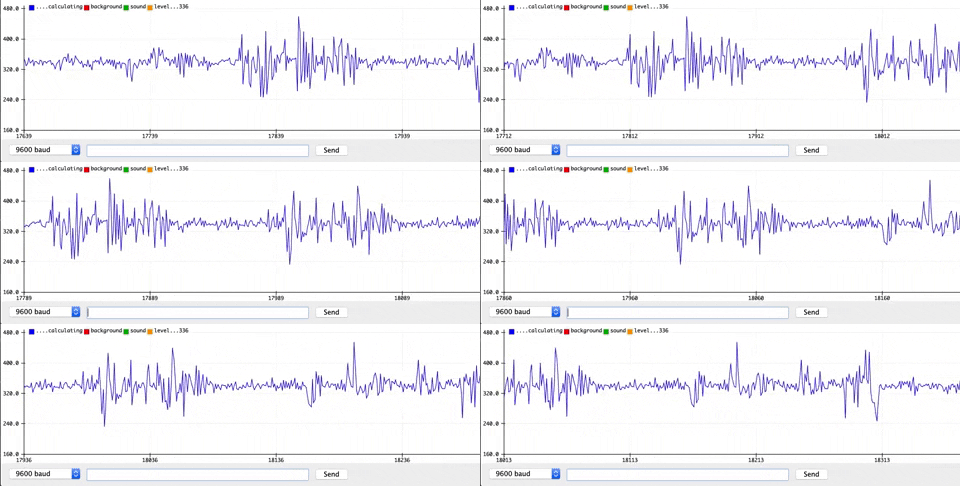
Sound waves cause a diaphragm in the Mic to vibrate, which produces a voltage, giving essentially a volume level. This voltage is passed to the Elegoo Uno in real-time and looks like this:
In this snippet, I am talking which can be seen in the pulses of higher volume level, but in the gaps of my speech, it is still constantly vibrating.
We only want our trigger to be pulled if the opponent has fired, and this constantly changing volume could trigger it at a random point if we set a constant threshold level, especially if there is wind or someone talking.
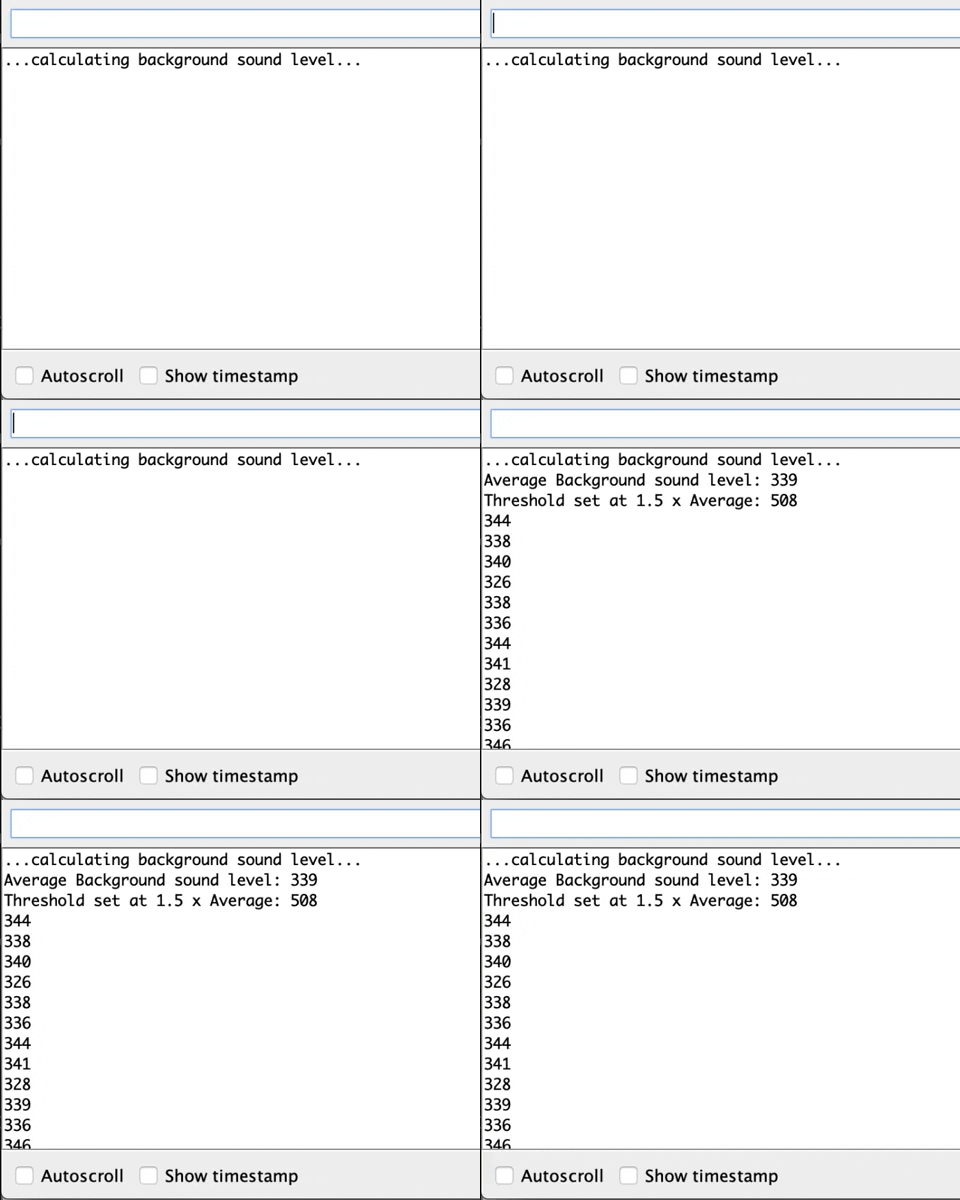
To account for the vibration, the FindThreshold() function in the code takes a 10-second sample of the ambient sound level and sets a threshold of 1.5 times that level.
Then in the main loop of the code, the microphone is constantly reading in the sound level, and if it detects that this threshold is exceeded it will send a command to the servo motor to rotate 30 degrees, which will pull the string attached to the trigger.
This is of course not meant to be used in a serious way, but it was fun to put together nonetheless.
Obstacles
No real obstacles on this one apart from the servo motor I originally had from the starter kit was not providing enough torque to pull the trigger, but this was a quick fix in purchasing a stronger one from Amazon.


Comments
Post a Comment